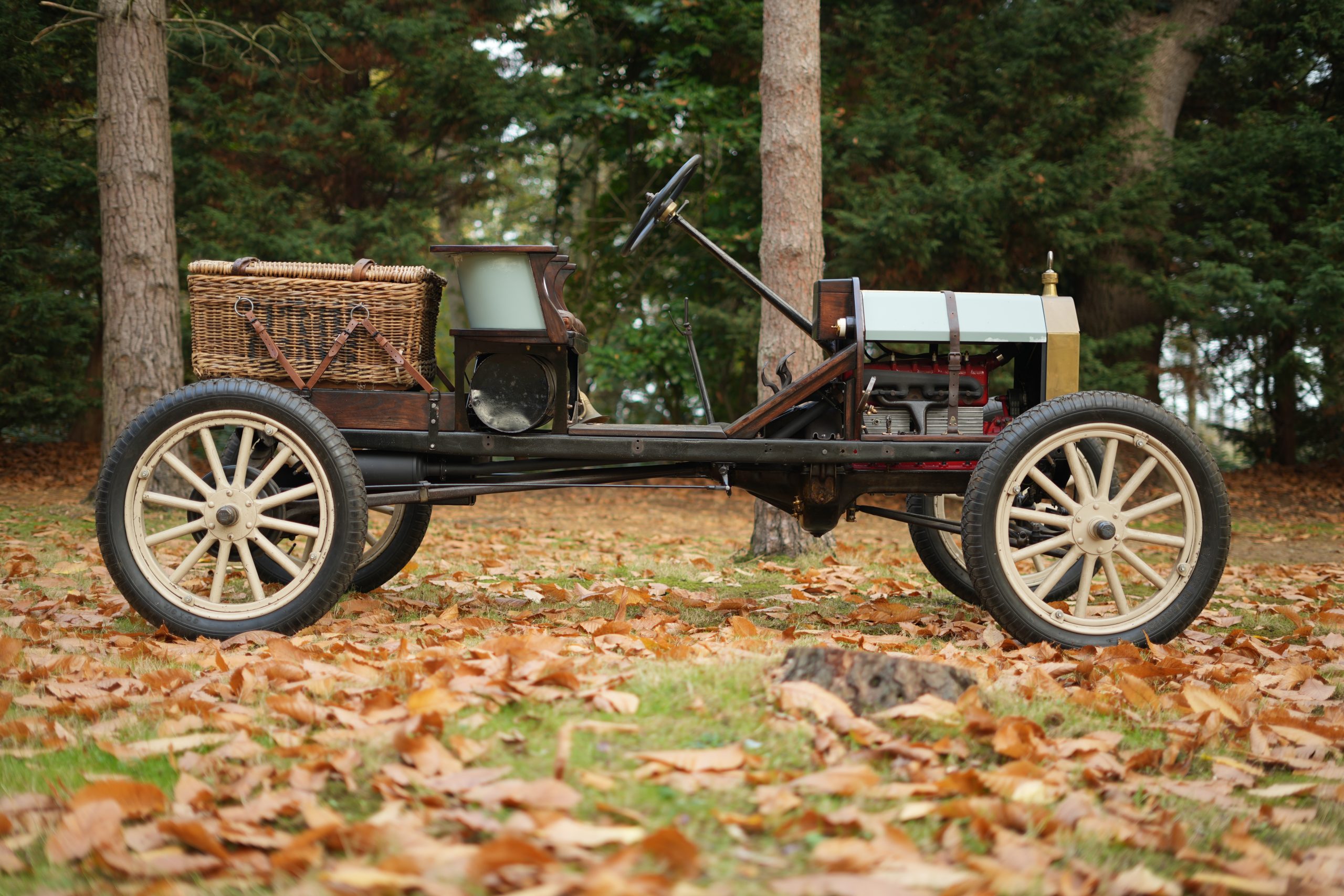
1926 Ford Model T Speedster
This car began life as the sort of Ford that put the world on wheels. Then someone removed the sensible bits. No roof, no doors, no windscreen, no front brakes, no normal pedals – just a couple of seats, a simple engine, and enough noise and wobble to make 40 mph feel like flying.
The Speedster
By 1926, Henry Ford had built around 14 million Ford Model Ts. They were everywhere and second-hand ones were cheap.
This led to the 1920s craze of taking these basic cars and turning them into “speedsters”. The heavy bodywork was discarded, the engine ‘hotted up’, the chassis lowered and the suspension improved.
Some of these creations were well engineered racing machines. Others were hastily put together with whatever materials came to hand, making fun, slightly dangerous ‘raceabouts’ for the road.
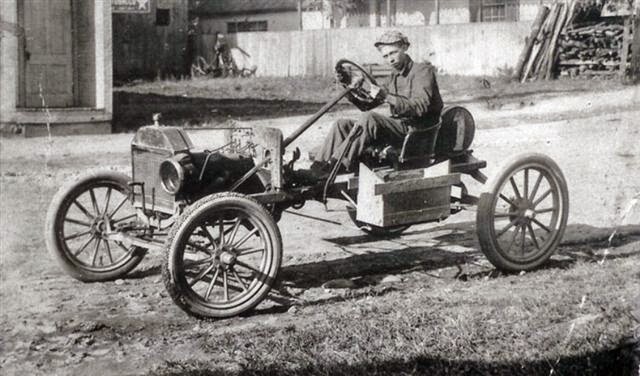
The Ford Model T
The Model T was built from 1908 to 1927 and the basic design barely changed.
It is wonderfully simple. No oil pump, no water pump, no shock absorbers, no front brakes.
The biggest head scratcher is its unusual ignition system – 16 flywheel magnets and 4 wooden boxes create enough voltage to light a spark and ignite the fuel.
The roads it was designed for were very different to those of today. The chassis was designed to flex to handle deeply rutted tracks and the brakes were for bringing you to a halt when you got to your final destination.
Is it fast?
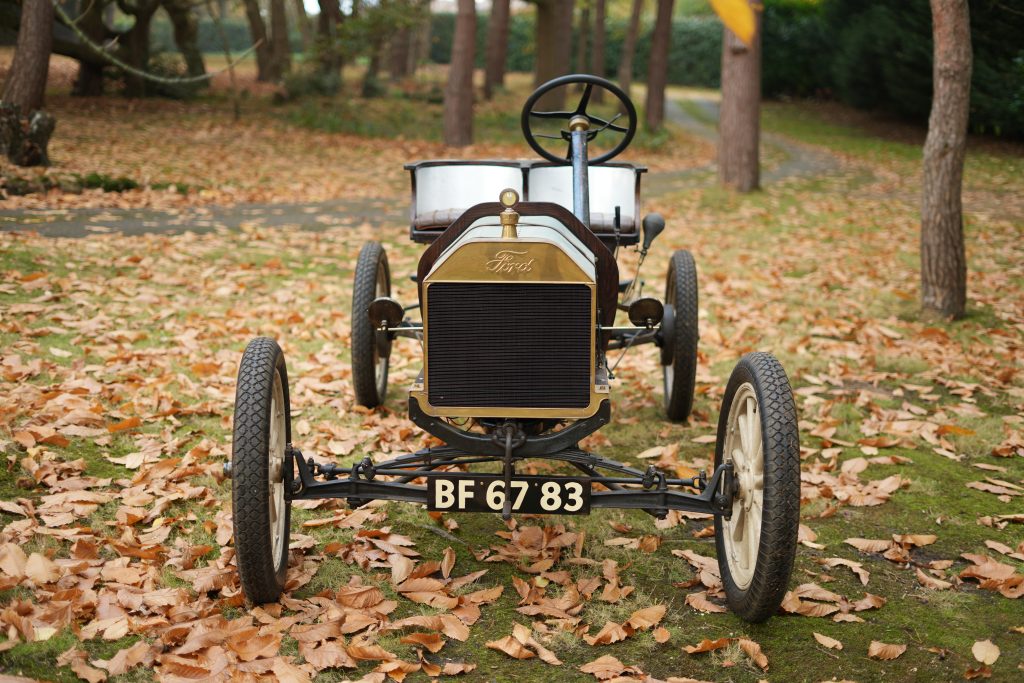
This particular car gets its performance from its light weight. Mechanically it’s all original Model T, sitting high off the ground on its wooden wheels.
This, coupled with its skinny tyres, rear wheel only braking, quirky pedal layout and lack of any doors, windscreen or other creature comforts makes it exciting to drive at any speed.
40 mph is easy. Above that is quite the adventure.
How do you drive it
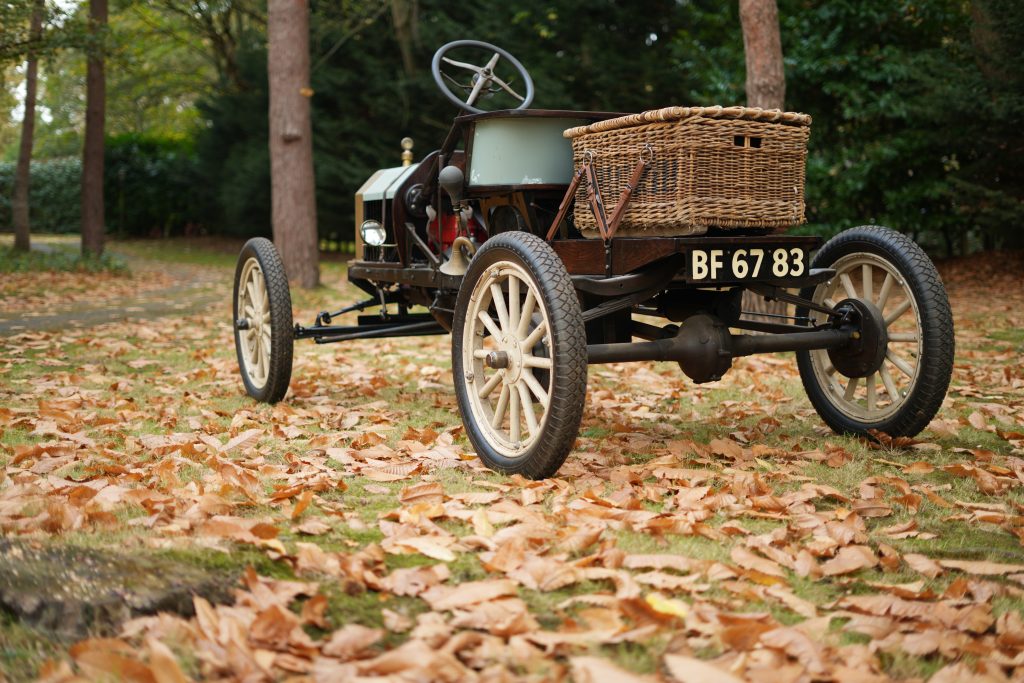
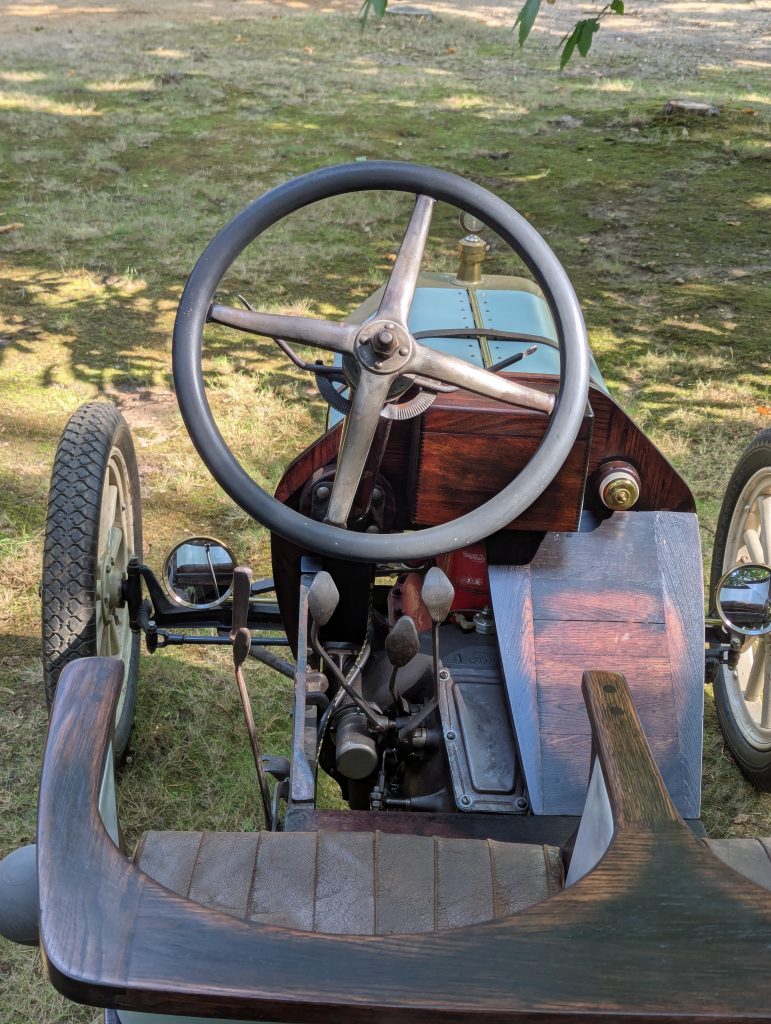
Not like a modern car. The pedals are odd, the throttle is on the steering column and the driver has to think about spark advance, mixture, gears, brakes, and survival – ideally all at once.
What do the pedals do?
It has three pedals, but forget everything you know about modern cars.
Left pedal: forwards
Press it down for low speed. Release it for high speed.
Middle pedal: reverse
Yes, reverse has its own pedal.
Right pedal: stop
This works on a drum inside the gearbox and only brakes the rear wheels.
What do the levers do?
Right column lever: accelerator
This controls the throttle.
Left column lever: spark advance
This changes the ignition timing. Too far one way and the engine is lazy. Too far the other and it may complain loudly.
Floor lever: everything else
An emergency brake when pulled full back, neutral, low speed or reverse when upright (depending on the pedals) and high speed when fully forward
It all takes a little practice and a lot of concentration. Driving a Model T is less like operating a car and more like conducting an school orchestra.
Overview
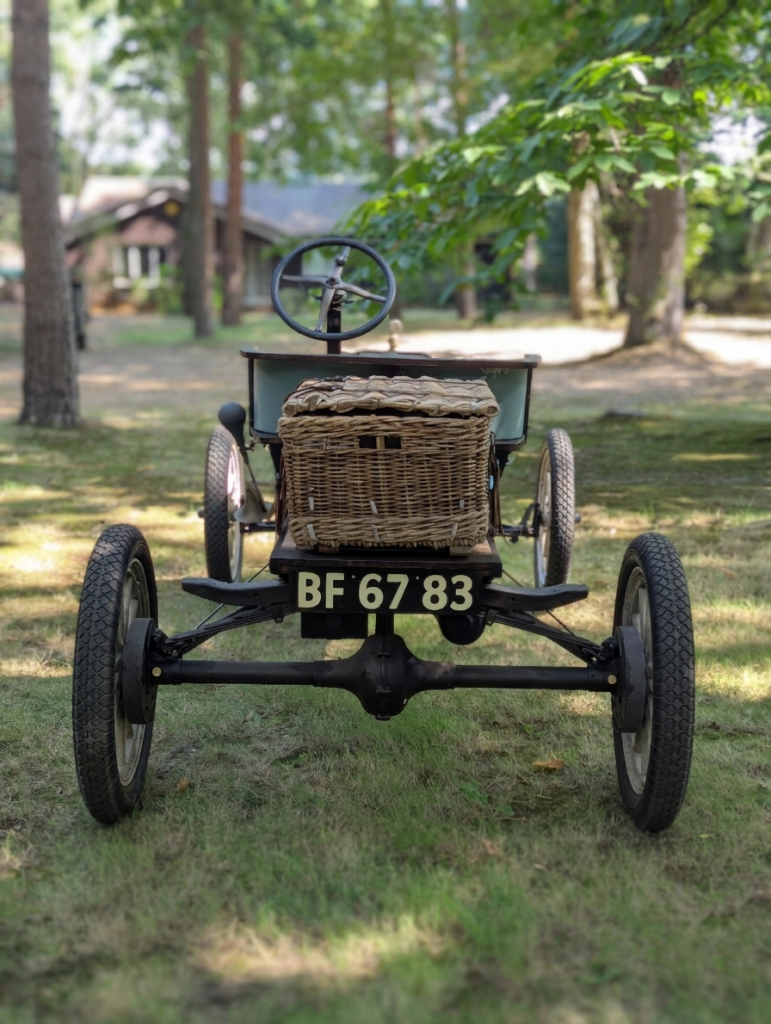
- Ford Model T “Speedster”
- Registration: BF6783
- First registered: 1926
- Price when new: £90
- Engine: 2.9 litre
- Power: 20 HP
- Weight: 590 kg
- Top Speed: Driver dependent
- 0-60pm: N/A
- Economy: 25 mpg
- Range: 125 miles